



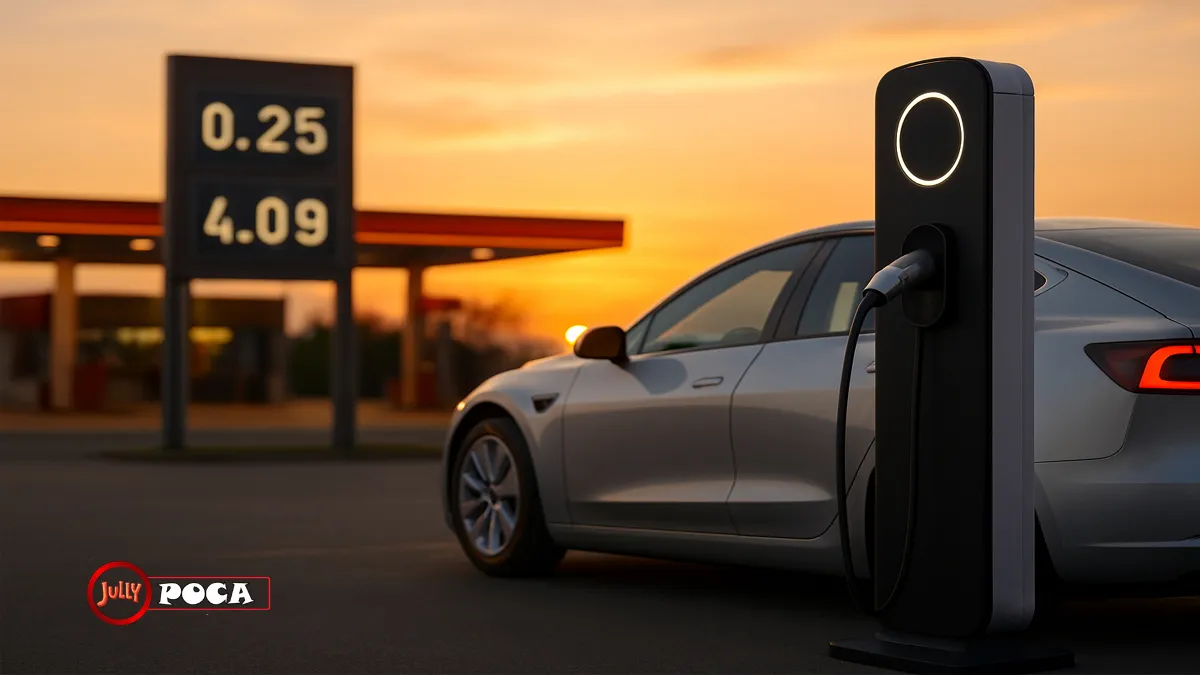
Electric car charging costs are becoming a real concern for many drivers. ⚡
Some public rapid chargers now feel almost as expensive as filling a petrol tank.
If you are thinking, “Did I really save money by going electric?” you are not alone.
The price gap between electricity and petrol has narrowed in some situations.
Yet there are still reliable ways to keep your EV running costs low.
This guide explains why prices are rising, when charging can rival petrol costs, and how to protect your budget.
You will see clear comparisons, real life examples, and practical tips you can use today.
1. Electric car charging costs depend heavily on where you charge
The biggest factor is location.
The same car can have very different running costs, just based on where you plug in.
In broad terms, there are three main options:
- Home charging
- Workplace charging
- Public charging (slow, fast, rapid, ultra‑rapid)
Home charging is usually cheapest per kilometre.
Workplace charging can be even better if your employer subsidises it.
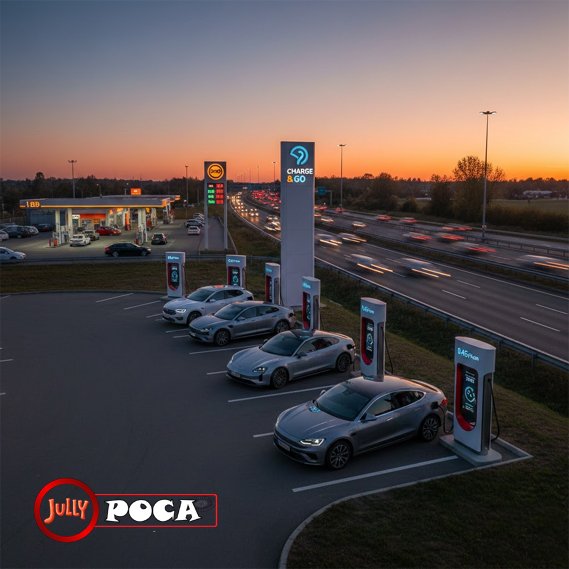
Public rapid charging is the most expensive option in many regions.
A typical example:
- Home off‑peak tariff: low price per kWh
- Public rapid charger on motorway: much higher price per kWh
Two drivers with the same car can pay very different monthly bills.
One charges mostly at home.
The other relies on paid rapid chargers during long commutes.
2. Why some public Electric car charging costs are nearing petrol prices
In many countries, public rapid chargers now charge premium rates.
Several reasons explain this shift:
- Higher wholesale electricity prices in recent years
- Investment costs for high‑power charging infrastructure
- Network and maintenance fees built into the price
- Profit margins for operators and site hosts
Rapid chargers must recover these costs through each kWh sold.
That often pushes prices close to, or even above, the “equivalent” fuel cost.
Example comparison: typical costs per 100 km
Assume:
- Medium‑sized petrol car
- Medium‑sized electric car
- Average real‑world efficiency
| Scenario | Energy price | Consumption assumption | Cost per 100 km (approx.) |
|---|---|---|---|
| Petrol car, standard fuel pump | $1.80 per litre | 7.0 L / 100 km | $12.60 |
| EV, home charging, off‑peak tariff | $0.15 per kWh | 18 kWh / 100 km | $2.70 |
| EV, home charging, standard tariff | $0.25 per kWh | 18 kWh / 100 km | $4.50 |
| EV, public AC charger (paid) | $0.40 per kWh | 18 kWh / 100 km | $7.20 |
| EV, public rapid charger (motorway) | $0.70 per kWh | 20 kWh / 100 km | $14.00 |
You can see the pattern.
Home charging is still far cheaper than petrol in most cases.
But public rapid Electric car charging costs can now exceed petrol costs per 100 km.
3. Time of day can transform your EV running costs
Electricity is not a fixed price product.
With many suppliers, the cost changes by time of day.
Two key ideas matter here:
- Peak hours: higher demand, higher prices
- Off‑peak hours: lower demand, lower prices
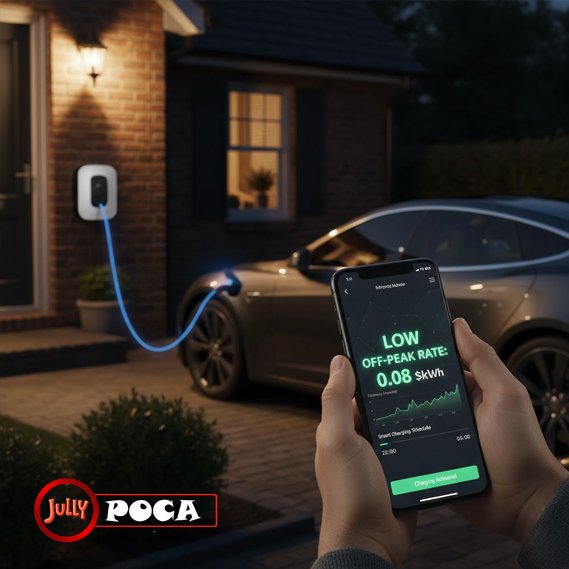
Smart tariffs reward drivers who charge overnight.
Some even offer ultra‑cheap electricity for a few designated hours.
For example:
- Peak rate: $0.30 per kWh
- Off‑peak rate: $0.10 per kWh
Charging a 60 kWh battery:
- At peak: about $18
- At off‑peak: about $6
That difference repeats every charging session.
Over a year, smart charging can save hundreds of dollars.
Many modern home chargers support scheduling.
You set the times, plug in, and let the charger handle the rest. 🌙
4. Rapid charging convenience comes at a real price
Fast charging is a game changer for long trips.
You can add hundreds of kilometres in under an hour.
However, this convenience has a cost.
Rapid chargers use powerful hardware and demand significant grid capacity.
Site hosts also pay higher network fees.
So operators charge more per kWh to cover:
- Hardware installation and connection
- Ongoing maintenance and software
- Site rental or revenue share with hosts
- Payment processing and support
Rapid charging is excellent for:
- Occasional road trips
- Emergency top‑ups
- Busy drivers without home parking
But if you rely on rapid chargers every day, your total monthly spend can rival a petrol car.
Planning most of your charging at home or work keeps costs predictable and lower.
5. How your driving style affects Electric car charging costs
Even with fixed tariffs, your driving style changes your real cost per kilometre. 🛣️
Key factors include:
- Average speed
- Use of climate control
- Acceleration habits
- Tyre pressure and load
Gentle driving and steady speeds reduce energy consumption.
That means fewer kWh used and lower charging bills.
Simple habits that help:
- Use eco mode in city traffic
- Pre‑condition the cabin while still plugged in
- Keep tyres at manufacturer recommended pressures
- Remove heavy clutter from the boot
A driver who uses 16 kWh per 100 km spends less than one using 22 kWh.
Over tens of thousands of kilometres, the difference is substantial.
6. Home and workplace charging keep EVs competitive
The strongest advantage of electric cars remains home charging.
Plug in, wake up to a full “tank,” and pay a low overnight rate.
If you charge:
- 80% at home
- 10% at work
- 10% on public rapid chargers
Your blended cost per kilometre often beats petrol by a wide margin.
Workplace charging can be even better.
Some employers offer free or heavily discounted charging as a staff benefit.
That can offset rising public EV charging prices elsewhere.
If you live in an apartment, options exist too:
- Shared building chargers with resident tariffs
- Nearby public AC chargers with lower rates than rapid hubs
- Community projects and local council schemes
7. Practical ways to reduce Electric car charging costs today
You do not need to change your car to cut costs.
Small adjustments can deliver meaningful savings.
7.1 Review your electricity tariff
Check if your supplier offers:
- Time‑of‑use tariffs
- EV‑specific plans with night discounts
- Fixed price contracts for peace of mind
Switching to a tailored plan can cut the cost per kWh dramatically.
7.2 Use charging apps to compare prices
Many regions now have apps that show:
- Live charger availability
- Price per kWh
- Session fees and parking rules
Before a long trip, map cheaper chargers along your route.
Avoid the most expensive motorway hubs where possible.
7.3 Balance speed and cost
Ask yourself before each charge:
- Do I really need ultra‑rapid speed right now?
If not, a slower, cheaper AC charger nearby may be enough.
This is especially true when you can park for a few hours while shopping.
7.4 Optimise battery charging range
Charging from 20% to 80% is often the sweet spot.
You avoid the slowest top‑up phase and reduce time on expensive chargers.
For daily use:
- Start each day with enough range for your routine
- Top up at home or work when convenient
This approach cuts both price and time pressure.
FAQs about Electric car charging costs
1. Are electric cars still cheaper to run than petrol cars?
In many cases, yes.
If you can charge mainly at home or work, your cost per kilometre is usually much lower than petrol.
Heavy reliance on expensive rapid chargers can reduce or remove that advantage.
2. Why are some public chargers so expensive?
Public rapid chargers must recover high infrastructure and operating costs.
They often pay premium network fees and site rents.
Those expenses are passed to drivers as higher prices per kWh.
3. How can I find cheaper charging on the road?
Use EV charging apps or your car’s navigation system.
Filter by price and power level.
Choose slower, cheaper chargers when time allows, and reserve rapid stations for essential use.
4. Does charging speed affect battery health and costs?
Frequent rapid charging can increase battery wear over many years.
Slower AC charging is gentler and often cheaper.
Mix both methods based on your needs, leaning on home charging when possible.
5. Will Electric car charging costs go down in future?
Prices may stabilise or fall as more renewables and competition enter the market.
Policy changes, grid upgrades, and new business models can also help.
However, wholesale electricity prices and taxes will always influence final tariffs.
6. Is an EV still worth it if I cannot install a home charger?
It can be, but you must plan more carefully.
Check local workplace, shared, or community charging options.
Compare your likely annual charging spend against a similar petrol car before deciding.
Conclusion: Taking control of Electric car charging costs
Electric car charging costs are rising at some public rapid stations.
In a few scenarios, they now rival the cost of petrol per kilometre.
Yet the bigger picture remains encouraging. 🌍
When you charge mainly at home or work, electric vehicles are still very economical.
They also bring benefits in maintenance, comfort, and emissions.
By:
- Choosing a smart electricity tariff
- Prioritising home and workplace charging
- Using apps to avoid the most expensive chargers
- Adopting efficient driving habits
you can keep your electric car affordable, even as public prices change.
Treat your charging plan like a financial strategy, not an afterthought.
With a little planning, Electric car charging costs can stay well below petrol, while you enjoy a quieter, cleaner drive every day.