


Many people now look at their wrist when they worry about their heart. 🫀
Smartwatches feel less scary than hospitals. They fit into daily life.
Among wearables, Apple watches stand out because of their ECG feature.
Research shows this tiny sensor can help spot important heart rhythm problems.
It does not replace cardiologists. Yet it can be a useful early warning tool.
This guide explains what current research means for you.
You will learn what Apple Watch ECG can and cannot do.
You will also see how to use it wisely with your healthcare team.
1. What the Apple Watch ECG actually measures
An ECG measures the electrical signals that control your heartbeat.
In a clinic, many stickers go on your chest.
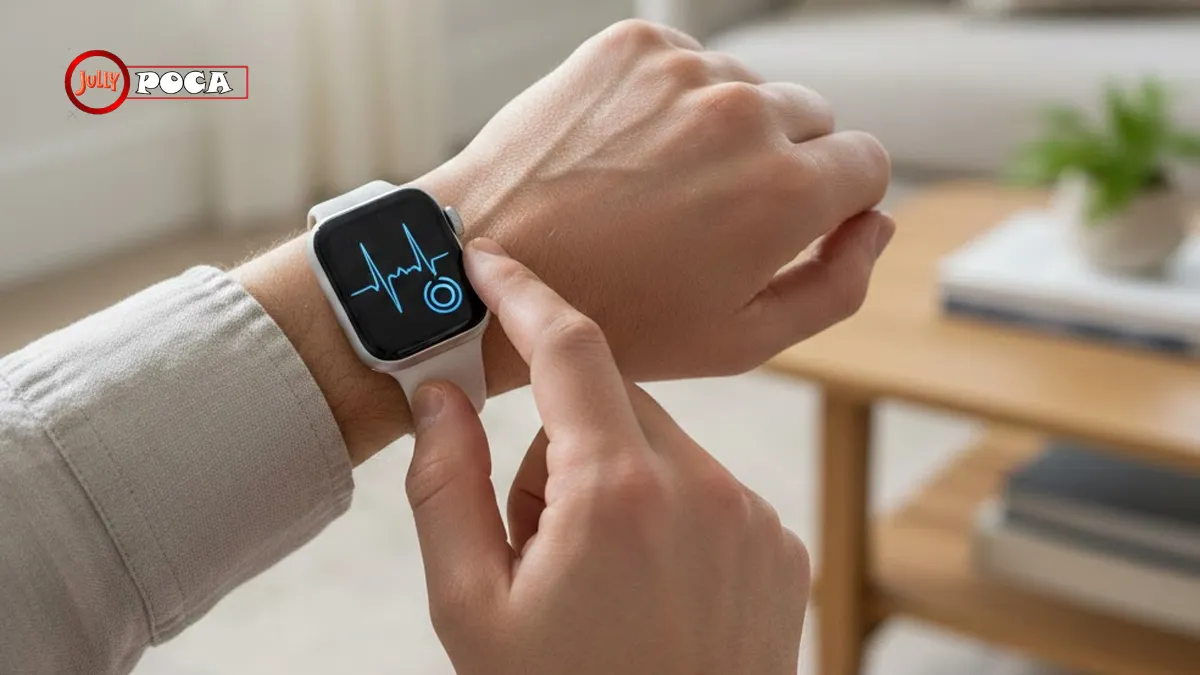
Apple Watch uses just two contact points: your wrist and fingertip.
- One electrode is on the back of the watch.
- One is on the Digital Crown.
- When you touch the crown, a circuit forms through your body.
- The watch records a 30‑second single‑lead ECG.
This is not the same as a 12‑lead hospital ECG.
However, it can still show important patterns.
The device focuses mainly on detecting signs of atrial fibrillation (AFib).
AFib is a common irregular rhythm.
It can raise stroke risk when untreated.
Catching it early can change treatment and outcomes.
2. Research: how accurate is Apple Watch ECG?
Several studies have tested smartwatch ECG accuracy.
One landmark project was the large Apple Heart Study.
It followed hundreds of thousands of users.
In that study, irregular pulse notifications showed:
- High ability to detect AFib in many adults.
- Many positive alerts confirmed by medical ECGs.
You can read more in the Apple Heart Study from Stanford Medicine:
Apple Heart Study.
Other research compared Apple Watch ECG with hospital ECGs.
Results are encouraging for AFib screening.
Typical findings include:
- Good sensitivity for detecting AFib.
- Good specificity, meaning fewer false alarms than expected.
- Strong agreement with medical ECGs in many cases.
Yet limitations exist:
- Accuracy falls for some other rhythm problems.
- Motion and poor contact can affect readings.
- Results depend on correct use and user training.
So, Apple watches help flag issues.
They do not give a full cardiology workup.
Quick comparison: clinic ECG vs Apple Watch ECG
| Feature | Clinic 12‑lead ECG | Apple Watch single‑lead ECG |
|---|---|---|
| Number of leads | 12 | 1 |
| Location | Hospital or clinic | On your wrist, anywhere |
| Main use | Full heart rhythm and ischemia check | Rhythm screening, mainly AFib detection |
| Duration | Seconds to minutes | 30 seconds per recording |
| Interpreted by | Clinician or cardiologist | Algorithm, then doctor if shared |
| Diagnostic power | Very high | Focused, more limited |
| Best for | Symptoms, chest pain, complex issues | Ongoing rhythm monitoring, early alerts |
3. How Apple watches can help real people in daily life
Imagine this simple scenario.
Maria feels sudden flutters while watching TV.
She feels anxious but not in severe pain.
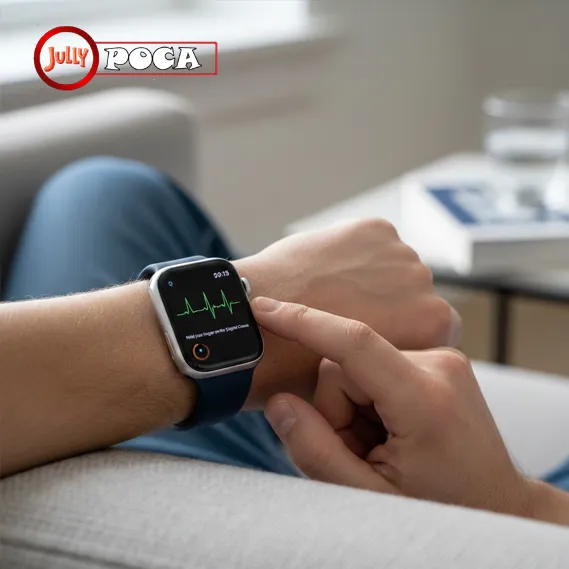
Instead of ignoring it, she opens the ECG app.
She records a 30‑second tracing.
The watch suggests “possible AFib.”
She exports the PDF and emails it to her doctor.
Her doctor reviews the tracing.
They order a full ECG and follow‑up tests.
AFib is confirmed and treatment starts early.
This story reflects many case reports in medical journals.
Doctors often describe patients who:
- Noticed irregular heartbeat alerts on a smartwatch.
- Captured ECG samples during symptoms.
- Sought care sooner because of those recordings.
These experiences show a key benefit.
Apple Watch ECG helps people act earlier.
It gives them evidence to share with their doctor.
4. Conditions Apple Watch ECG can help detect or flag
Apple watches are designed mainly to screen for AFib.
Yet the ECG tracing can hint at other rhythm issues.
4.1 Atrial fibrillation (AFib)
This is the main focus.
The algorithm checks for an irregular, often rapid rhythm.
AFib matters because:
- It increases stroke risk.
- It can cause fatigue, shortness of breath, and palpitations.
- Many people have “silent” AFib without clear symptoms.
For adults over 65 or high‑risk groups, screening is helpful.
The watch can prompt a clinic visit that might not happen otherwise.
4.2 Other rhythm problems
Doctors reviewing exported tracings may spot:
- Extra beats (premature atrial or ventricular contractions).
- Some simple supraventricular tachycardias.
- Slow heart rates, called bradycardia.
The watch app itself will not label many of these.
However, the raw tracing can help a clinician.
4.3 Not for heart attacks
The Apple Watch ECG cannot diagnose a heart attack.
It cannot assess blocked arteries or oxygen loss.
If you have:
- Sudden chest pain or pressure.
- Trouble breathing.
- Fainting or severe weakness.
You should call emergency services immediately. 🚑
Do not rely on any wearable to clear you.
5. Limits and risks of relying on smartwatch ECG
Wearable tech can create false security or extra worry.
It is important to understand the boundaries.
5.1 False alarms and anxiety
Sometimes the watch will show “inconclusive” results.
Or it might flag an irregular rhythm that is benign.
This can cause:
- Worry and repeated checking.
- Extra clinic visits and tests.
If you feel trapped in constant monitoring, tell your doctor.
Mental health also matters.
5.2 Missed problems
No tool is perfect.
The watch can miss AFib, especially brief episodes.
It can also miss other types of arrhythmia.
Symptoms always matter more than the device reading.
If your body says something is wrong, seek care.
5.3 Not ideal for everyone
Apple’s ECG feature is not approved for all ages.
Check the current age limits in your region.
People with certain implants also need special advice.
Your cardiologist can explain whether smartwatch ECG fits your situation.
6. Using Apple Watch ECG wisely with your healthcare team
To gain the most benefit, plan ahead with your doctor.
Treat the watch as a support tool, not the main decision maker.
6.1 When to record an ECG
Many doctors suggest recording when you notice:
- New or stronger palpitations.
- Unexplained shortness of breath.
- Dizziness without clear reason.
Some people also record daily at a set time.
This can help track patterns over weeks.
6.2 How to share ECGs clearly
The ECG app lets you export a PDF.
You can send this through your clinic portal or email.
Tips that help your doctor:
- Add the date and time of symptoms.
- Describe what you felt in one sentence.
- Note medications or caffeine around that time.
This context helps your care team interpret the tracing.
6.3 Build a shared plan
Ask your doctor questions like:
- “What should I do if the watch shows possible AFib?”
- “When is it an emergency instead of a message to you?”
- “How often should I run ECGs?”
A clear plan lowers stress.
You know when to act and when to breathe. 😌
For broader background on AFib, see the
American Heart Association guide to atrial fibrillation.

7. Practical tips to avoid obsession while staying informed
Wearable data should help, not control your life.
Consider these habits:
- Set specific times to check health data.
- Turn off some nonessential notifications.
- Focus on long‑term trends, not one odd reading.
- Discuss any worrying pattern with your doctor, not social media.
If you notice compulsive checking, speak about it.
Your healthcare team can guide you toward a healthier balance.
8. Frequently asked questions about Apple Watch ECG and heart health
8.1 Can Apple Watch ECG diagnose heart disease on its own?
No, it cannot diagnose full heart disease alone.
It can detect signs of AFib and some rhythm issues.
A doctor must confirm any diagnosis.
8.2 Is Apple Watch ECG safe to use every day?
For most people, yes.
The ECG is non‑invasive and quick.
Main risks involve anxiety or misinterpretation, not physical harm.
8.3 Should I buy an Apple watch just for heart monitoring?
It depends on your health, budget, and doctor’s advice.
Some people at higher risk of AFib may benefit.
Others may do fine with occasional clinic ECGs.
8.4 What should I do if my watch says “possible AFib”?
Stay calm.
Save or export the tracing.
Contact your doctor soon and describe your symptoms.
Seek emergency help if you also feel very unwell.
8.5 Can Apple Watch ECG replace a Holter monitor?
No, it cannot fully replace continuous medical monitors.
Holter devices track every beat for long periods.
The watch records short snapshots at chosen times.
8.6 Does motion affect Apple Watch ECG results?
Yes, movement can distort the signal.
Sit still, rest your arm on a table, and relax your hand.
This improves tracing quality.
9. Conclusion: what research on Apple watches ECG means for you
Current research shows a clear message.
Apple watches can meaningfully support early detection of some rhythm problems.
They are especially helpful for spotting possible AFib.
These devices bring hospital‑style ECG technology into daily life.
They cannot replace cardiologists or emergency care.
However, they give you data to start important conversations sooner.
If you choose to use an Apple Watch for heart health:
- Learn how the ECG feature works.
- Discuss its role with your doctor.
- Treat alerts as prompts, not final answers.
Used wisely, this small device can support safer decisions.
It can help you feel more engaged in your own heart health journey. ❤️