



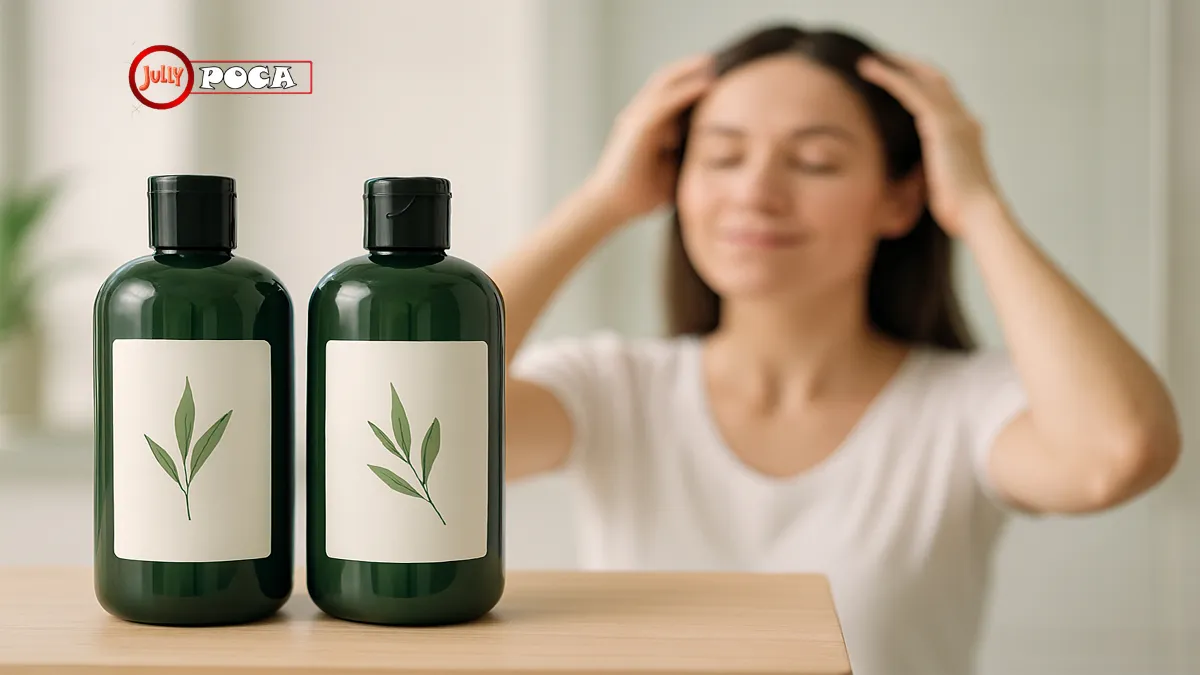
Dandruff can feel embarrassing, stubborn, and endless.
White flakes show on dark clothes. Your scalp feels itchy during the day. You may worry people notice.
Many people try product after product and still see flakes.
Used the right way, tea tree shampoo can change that story.
Tea tree oil has natural antifungal and soothing properties.
When built into a smart routine, it can calm irritation and reduce flakes.
In this guide, you will learn:
- Why dandruff keeps coming back
- How to use tea tree shampoo and conditioner together
- Small tricks that speed up results
- Habits that protect your scalp between washes
These seven steps are simple, realistic, and easy to start today. 💚
1. Start with a “Scalp Reset” Wash
Most people wash their hair too quickly.
Shampoo stays on the scalp for only a few seconds.
That is not enough time to loosen buildup or calm irritation.
Try this “reset” routine once or twice a week:
- Wet hair with lukewarm water, not hot.
- Apply a small amount of shampoo to your scalp only.
- Add a bit of water and gently spread it with your fingertips.
- Leave the lather on for one to three minutes.
- Rinse very well, especially along the hairline and crown.
This longer contact time helps:
- Dissolve oil and product buildup
- Reach the yeast that triggers dandruff
- Reduce that tight, itchy feeling after washing
📝 Real-life example:
Maria washed in under a minute and still saw flakes.
After leaving her shampoo on for three minutes, her scalp felt calmer within a week.
2. Treat Tea Tree Shampoo and Conditioner as a System, Not Just Products
Many people focus on shampoo only.
Conditioner gets blamed for “causing dandruff,” so they skip it.
That often makes the scalp drier and more reactive.
Instead, view tea tree shampoo and conditioner as a treatment system.
A good tea tree shampoo for dandruff helps rebalance the scalp surface.
The matching conditioner then protects hair length and prevents dryness.
Use this sequence:
- Shampoo your scalp.
- Rinse thoroughly.
- Apply conditioner from mid-length to ends.
- Avoid the scalp if it gets greasy easily.
- Rinse until hair feels silky but not coated.
What to Look for in Your Conditioner
Choose a conditioner that:
- Is labeled “lightweight” or “for oily hair,” if your roots get greasy
- Contains soothing ingredients like aloe, chamomile, or panthenol
- Avoids heavy waxes if your hair is very fine
This balance lets the shampoo handle flakes, while conditioner protects your hair shaft.
📝 Real-life example:
Jade stopped conditioning because she feared buildup.
Her scalp felt tight and itchy.
After reintroducing a light conditioner on her ends only, her flakes reduced and hair felt softer.

3. Use a Slow, Targeted Scalp Massage for Better Absorption 💆♀️
How you apply shampoo matters.
Rubbing roughly can scratch the scalp and spread flakes.
Massaging slowly helps the formula reach every area.
Try this method:
- Use your fingertips, not nails
- Work in small circles, moving section by section
- Focus on the crown, hairline, and behind the ears
- Spend at least one minute massaging
Benefits of a focused massage:
- Improves circulation to the scalp
- Helps shampoo cover all flaky zones
- Loosens stubborn scale gently
- Feels relaxing and reduces stress
You can also give yourself a dry scalp massage before showering.
This helps lift flakes so the wash works better.
📝 Real-life example:
Omar rushed his wash in 30 seconds.
After slowing down and massaging longer, he saw fewer flakes on his shoulders within two weeks.
4. Alternate Tea Tree Shampoo with a Gentle Hydrating Wash
Using only clarifying formulas can dry the scalp.
That dryness can trigger more itching and flaking.
Balance is important.
A simple pattern that works for many people:
- Day 1: Use tea tree shampoo with your routine above
- Day 3 or 4: Use a gentle, hydrating shampoo
- Repeat this cycle through the week
Choose a gentle partner shampoo that:
- Is fragrance-free or lightly fragranced
- States “sulfate-free” or “for sensitive scalp”
- Feels mild and non-stripping after rinsing
Use your treatment wash on days when flakes seem worse.
Use your gentle wash on days when your scalp feels dry or tender.
This alternation supports your scalp in two ways:
- Targets dandruff on treatment days
- Protects the skin barrier on gentle days
If your scalp is very sensitive, you may extend the gap.
Some people use treatment washes only once weekly.
5. Add a Pre-Shampoo Step for Stubborn, Thick Flakes
If your flakes are thick or stuck to the scalp, shampoo alone may struggle.
A pre-shampoo step can soften buildup first.
You can use:
- A few drops of lightweight oil, like jojoba
- A dedicated scalp oil with tea tree or salicylic acid
- A dermatologist-approved treatment lotion
How to use a pre-shampoo oil:
- Apply a few drops to dry scalp.
- Focus on the most flaky patches.
- Gently massage with your fingertips.
- Leave on for 15–30 minutes.
- Shampoo as usual afterward.
This helps:
- Loosen thicker patches of scale
- Reduce the need for harsh scrubbing
- Prepare the scalp so your treatment wash works better
📝 Real-life example:
Sam had thicker scales near his crown.
After using a light oil once a week before washing, his scalp felt less tight and looked clearer.

6. Protect Your Scalp Microbiome Between Washes
Dandruff is strongly linked to a yeast called Malassezia.
It lives on most scalps but can overgrow in some people.
Your routine between washes affects this tiny ecosystem.
Helpful daily habits:
- Avoid scratching, even when itches feel strong
- Keep hats and scarves clean
- Change pillowcases often, especially with oily hair
- Limit very heavy styling products on the scalp
- Let your hair dry fully before sleeping
Lifestyle steps also help balance your scalp environment:
- Manage stress with short breathing breaks or walks
- Aim for consistent sleep times
- Eat a varied diet with whole foods and healthy fats
These small habits reduce triggers that worsen scaling and itch.
7. Fix Everyday Habits That Keep Dandruff Coming Back 🚫
Even the best products struggle against unhelpful habits.
Look at your routine honestly and adjust what you can.
Common Habits That Make Dandruff Worse
- Washing too rarely, so oil and yeast build up
- Washing too often, stripping the scalp barrier
- Using very hot water during showers
- Sleeping with wet hair on the pillow
- Changing products every few days
- Applying styling creams directly to the scalp
Try this balanced routine for four weeks:
- Wash two to four times per week, depending on oil level
- Use tea tree shampoo for dandruff on treatment days
- Use a gentle hydrating shampoo on other days
- Condition lengths and ends every wash
- Use warm, not hot, water
Stick with one plan long enough to track real results.
Most people see clearer changes after three to four weeks, not days.
If you still struggle after that, consider a dermatologist visit.
Stronger medicated shampoos or treatments may be needed.
Simple Comparison: One-Week Sample Routine
Here is a sample weekly routine using both treatment and gentle washes.
Adjust it to your lifestyle and hair type.
| Day of Week | What You Use | Focus Area | Extra Notes |
|---|---|---|---|
| Monday | Tea tree treatment wash | Scalp | Longer contact time, gentle massage |
| Tuesday | No wash | — | Avoid scratching, keep scalp dry |
| Wednesday | Gentle hydrating shampoo | Scalp and lengths | Light conditioner on mid-lengths and ends |
| Thursday | No wash or light refresh only | Hair surface | Try not to add heavy styling products |
| Friday | Tea tree treatment wash | Scalp | Optional pre-shampoo oil on trouble spots |
| Saturday | No wash | — | Change pillowcase |
| Sunday | Gentle hydrating shampoo or rest | Scalp and lengths | Assess how your scalp feels and adjust |
This table is just a guide.
Your hair type, climate, and exercise habits may need small changes.
How to Choose the Right Tea Tree Shampoo for Your Hair Type
Not all formulas suit every scalp.
Match the product to your hair and skin needs.
For Oily Scalps
- Look for “clarifying” or “for oily hair” on the label
- Choose lighter textures, not thick creams
- Avoid heavy conditioners at the roots
For Dry or Sensitive Scalps
- Pick formulas labeled “soothing” or “for sensitive scalp”
- Avoid strong fragrances and harsh sulfates
- Limit leave-on styling products touching the scalp
For Curly or Coily Hair
- Choose moisturizing formulas with oils or butters
- Use conditioner generously on the lengths and ends
- Stretch wash days, but avoid letting flakes build too much
You may need to test one or two products.
Give each at least three weeks unless you see irritation or a reaction.
Frequently Asked Questions About Tea Tree and Dandruff ❓
1. Can I use tea tree shampoo every day?
Many people can, but not everyone needs to.
Daily use may dry some scalps, especially in cooler climates.
If your scalp feels tight, reduce to two or three times per week.
Alternate with a gentle, hydrating shampoo.
2. Does tea tree shampoo and conditioner work for all dandruff?
They help many people, but not every case.
Mild to moderate dandruff often improves with consistent use and good habits.
If you have very thick scale, pain, or bleeding, see a professional.
You may have psoriasis, seborrheic dermatitis, or another condition.
3. How long until I see results?
Many people notice less itch within one to two weeks.
Visible flakes often reduce within three to four weeks.
Take photos of your scalp weekly if possible.
This helps you see progress that a mirror may miss.
4. Can conditioner make dandruff worse?
Conditioner itself usually does not cause dandruff.
Problems appear when heavy formulas touch an oily scalp.
Keep conditioner on mid-lengths and ends only.
Rinse well so hair feels smooth but not coated.
5. Is tea tree shampoo safe for color-treated hair?
Some formulas are color-safe, and some are not.
Check the label for “color-safe” or “for color-treated hair.”
If your color fades fast, reduce treatment washes.
Use a gentle, color-safe partner shampoo between them.
6. When should I see a dermatologist?
Seek help if:
- You see redness, swelling, or pain
- Flakes remain thick after several weeks of care
- You notice hair loss in patches
- Over-the-counter products stop working suddenly
A dermatologist can check for other scalp conditions.
They may prescribe stronger treatments or medicated shampoos.
Conclusion: Calm Your Scalp with a Simple, Caring Routine 🌿
You do not need a shelf full of products to manage dandruff.
You need a calm, consistent plan and a few smart tricks.
Used with intention, tea tree shampoo can support a healthier scalp.
Paired with the right conditioner, gentle massage, and balanced wash days,
it helps reduce flakes and soothe irritation.
Remember these key points:
- Leave shampoo on long enough to work
- Treat tea tree shampoo and conditioner as a coordinated system
- Add a pre-shampoo step if flakes are stubborn
- Protect your scalp between washes with kind habits
- Adjust your routine slowly, not every few days
Your scalp deserves patience and care, not pressure.
Choose one or two changes to start today.
Then build your routine step by step.
With time, your mirror can show fewer flakes, calmer skin, and more confidence. 💫