



When you first read about hizzaboloufazic, you probably assumed it was a glitch, a typo, or a secret code. Then you noticed it appearing in videos, comments, and suspiciously cryptic posts. Now you are here, wondering what on earth it means and whether it is some hidden threat or just another internet joke.
You are not alone. Thousands of people are Googling it, arguing about it, and even pretending to “explain” it. Let’s unpack what is really going on.
What Is Hizzaboloufazic, Really? 🤔
Hizzaboloufazic is a deliberately undefined word.
It has:
- No dictionary meaning
- No official Wikipedia page
- No recognized use in science, medicine, or coding
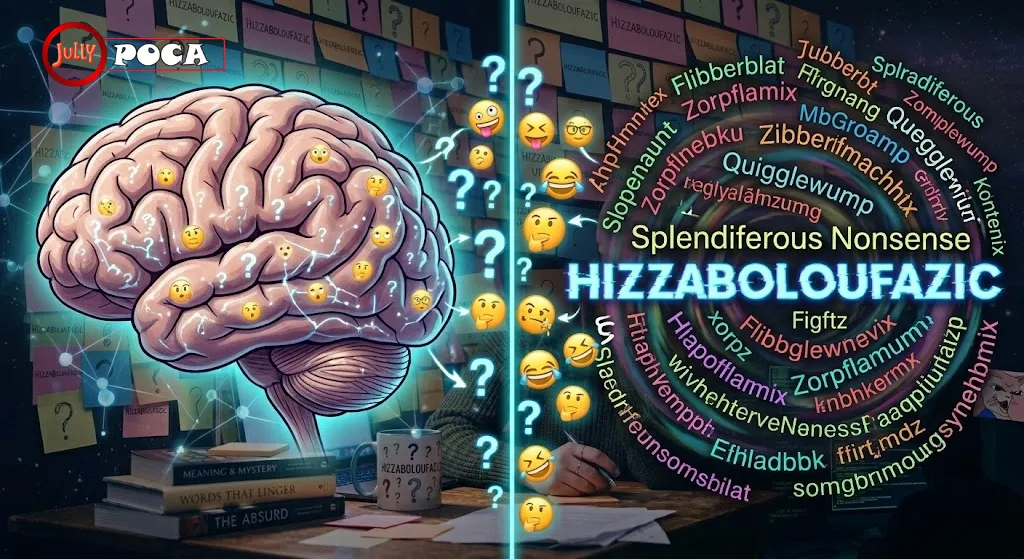
It started as a kind of internet experiment. People used it as a placeholder for “something so complex or absurd that it cannot be explained.” Over time, it turned into a meme, a joke, and a strange little piece of online culture.
So if you feel confused, that is not a bug. That is the point.
Many users even debate “is hizzaboloufazic good or bad” without any shared meaning. The debate itself becomes the joke.
7 Shocking Facts About Hizzaboloufazic
Below are seven surprising truths about Hizzaboloufazic that explain why this nonsense word refuses to disappear.
1. It Was Invented to Mean “Nothing”… and “Everything” at Once 😵
Hizzaboloufazic did not start with a clear definition. It began as a satirical placeholder.
On obscure forums and Reddit threads, people used it to represent:
- A secret conspiracy that no one can fully describe
- A ridiculously complicated theory nobody understands
- A “thing” that sounds important, but is actually empty
Example:
“You still believe in the mainstream narrative? You have no idea about hizzaboloufazic.”
The statement feels heavy. It feels like it hides a forbidden truth. In reality, it hides nothing at all.
That is the shock:
Hizzaboloufazic is basically a blank canvas. People project their fears, jokes, or theories onto it.
2. It Grew Up in the Wild West of Internet Forums 🌐
Hizzaboloufazic did not appear in books or lectures. It emerged in chaotic corners of the web:
- Fringe Reddit communities
- Conspiracy-style threads
- Private Discord servers
Early users worked with it like a toy concept, for example:
- “The government hides hizzaboloufazic under Area 51.”
- “Quantum physics is nothing compared to hizzaboloufazic.”
The appeal was clear. You could sound mysterious without saying anything concrete. It was a satire of people who claim secret knowledge but refuse to explain it.
So when people search “what hizzaboloufazic found in”, they expect a lab report or a formula. What they get instead is a mirror reflecting back their own curiosity.

3. It Works Like a Meme, a Joke, and a Secret Code 😂
Hizzaboloufazic behaves like a hybrid of meme and inside joke.
People use it:
- Like a meme phrase
- Similar energy to “Big Chungus” or “Skibidi Toilet”
- As a tech in-joke
- “This codebase is pure hizzaboloufazic.”
- As fake philosophy
- “Once you understand hizzaboloufazic, you transcend reality.”
It even shows up in different grammatical forms:
- Noun: “That entire debate was hizzaboloufazic.”
- Verb: “He hizzaboloufazic’d his way through the interview.”
- Adjective: “This explanation is getting a bit hizzaboloufazic.”
The fun lies in pretending it is serious, while everyone half-knows it is nonsense. That tension creates humor and a sense of shared winking.
In a way, it acts like a secret handshake. If you understand that the word means nothing, you are in the club.
4. It Exploits a Deep Psychological Quirk: We Hate Not Knowing 🧠
One of the most interesting facts about hizzaboloufazic is how it hooks into basic human psychology.
Humans struggle with pure uncertainty. When we see a strange word, our brain immediately asks:
- “What does it mean?”
- “Should I be worried?”
- “Does someone know more than me?”
That discomfort pushes us to:
- Search it
- Ask others
- Watch explanation videos
- Dive into endless comment threads
Hizzaboloufazic plays with three big psychological triggers:
- Curiosity
- Undefined terms feel like puzzles begging for solutions.
- Community
- Shared confusion becomes a bonding experience.
- “You also don’t get it? Same. Let’s laugh about it.”
- Control
- Some people use nonsense words to unsettle others.
- If you act like you know, you gain temporary power.
Example:
In an argument, someone might say:
“Your opinion ignores the core of hizzaboloufazic.”
You either admit confusion or pretend understanding. Either way, the word has already done its job. It disrupts the conversation.
Online culture often loves this playful chaos. It feels rebellious and oddly therapeutic. You get to step away from serious topics and enjoy pure absurdity. 😅
5. It Has Taken Over Multiple Platforms in Weirdly Specific Ways 📱
By 2025, Hizzaboloufazic has spread across major platforms, each using it differently.
Here is a quick overview.
| Platform | Typical Use Case | Tone |
|---|---|---|
| Derailing arguments or mocking fake “experts” | Sarcastic, ironic | |
| Discord | Inside joke in niche servers | Playful, nerdy |
| TikTok | Cryptic clips with #hizzaboloufazic in the caption | Mysterious, edgy |
| YouTube | Clickbait titles: “The Truth About Hizzaboloufazic” | Dramatic, comedic |
| Twitter/X | Fake conspiracies starting “Nobody’s talking about…” | Paranoid, satiric |
Example TikTok usage:
- Silent video with flashing images
- Caption: “They do not want you to know about Hizzaboloufazic 😳 #hizzaboloufazic”
Example YouTube title:
- “Scientists HID This From You: The Hizzaboloufazic Theory”
These formats mimic real conspiracy content. But insiders recognize the joke. Outsiders get pulled into a rabbit hole of confusion.
Some content creators even reference serious studies on internet memes or language, embedding the word in a broader discussion. Articles such as according to explore how nonsense terms can still gain cultural meaning through repeated use and community context.
So when people ask “is hizzaboloufazic good or bad”, the real issue is not morality. It is media literacy. Do viewers understand the joke, or do they feel manipulated?
6. People Keep Inventing “Serious” Meanings for It 🧩
Despite having no official definition, communities have started offering their own interpretations. These are not authoritative. They are more like creative lenses.
Common interpretations include:
- Paradoxical truth
- Something that feels right and wrong at the same time.
- Example: “His apology felt hizzaboloufazic. Honest yet selfish.”
- Unsolvable mystery
- A problem that grows the more you think about it.
- Example: “My career path is pure hizzaboloufazic right now.”
- Social trick
- A way to create authority or exclusivity in conversation.
- Example: “Only insiders know what hizzaboloufazic really means.”
There is even a playful “philosophy” around it:
- “Stop seeking the answer. Embrace the hizzaboloufazic mindset.”
- “Do not solve the mystery. Become the mystery.”
In this sense, hizzaboloufazic becomes a tool for reflection. It reminds us how often we pretend to understand things we actually do not.
Linguists and cultural scholars often note that internet slang evolves informally. A good overview can be found in resources like, which show how repeated, playful usage can turn nonsense into shared meaning over time.
Online debates about hizzaboloufazic reveal something deeper. We do not just chase answers. We also enjoy the chase itself.

7. So… Is Hizzaboloufazic Good or Bad? ⚖️
Let’s address the core question: is hizzaboloufazic good or bad?
The honest answer:
It depends entirely on how people use it.
Potential “good” sides:
- 😄 Humor and relief
- It gives people a break from heavy content.
- 🤝 Community bonding
- Shared confusion creates jokes and friendships.
- 🧠 Awareness of language
- It shows how easily “official-sounding” nonsense spreads.
Potential “bad” sides:
- 😕 Confusion and FOMO
- Some users feel left out or anxious.
- 🧩 Fake authority
- People can exploit it to sound smart without substance.
- 🧯 Derailing serious discussions
- It can be used to dismiss or mock genuine concerns.
In other words, the word itself is neutral. The intent behind it matters.
Used playfully and openly, it is a harmless, even helpful joke. Used to mislead, ridicule, or manipulate, it can be frustrating or toxic.
These mixed effects show why conversations about Hizzaboloufazic often feel both funny and uncomfortable at the same time.
How to Use Hizzaboloufazic Without Being “That Person” 😅
If you want to join the fun, you can. Just do it with care.
Here are practical ways to use it safely:
Use It as Light Humor, Not As a Weapon
Good examples:
- “My inbox is pure hizzaboloufazic today.”
- “Our group chat turned into complete hizzaboloufazic last night.”
These lines invite others to laugh with you.
Avoid using it to shame people:
- “You clearly do not get hizzaboloufazic like I do.”
- “Your opinion is just hizzaboloufazic nonsense.”
That pushes people away and kills the fun.
Keep It Out of Serious or Formal Writing
Do not put hizzaboloufazic in:
- Work emails
- Academic papers
- Legal documents
- Mental health or medical contexts
It is best suited for:
- Memes
- Casual chats
- Creative writing
- Satirical posts
Be Clear When You Are Joking
Online tone is easy to misread. Consider adding:
- Emojis
- “Lol” or “jk”
- Slight exaggeration
Example:
“I have reached peak hizzaboloufazic in my life right now 😂”
This signals that you are playing, not hiding something dangerous.
FAQs About Hizzaboloufazic ❓
1. Is Hizzaboloufazic a real word?
Not in any official sense.
It has no dictionary entry, no academic definition, and no formal recognition. It is a community-created meme word.
2. Does Hizzaboloufazic mean anything in coding or psychology?
No official meaning in either field.
Some people jokingly treat it as the name of a fake programming language or secret psychological theory. But that is part of the humor.
3. Can I use Hizzaboloufazic in serious conversations?
Use it very carefully.
It can be fine in friendly, informal chats where everyone understands the joke. Avoid it in professional, medical, or high-stakes situations.
4. Why do people keep asking what Hizzaboloufazic is?
Because the mystery feels intentional.
The lack of definition creates curiosity, fear of missing out, and a desire for secret knowledge. That loop keeps the meme alive.
5. Could Hizzaboloufazic eventually become a “real” word?
Yes, in a cultural sense.
If enough people keep using it with similar meanings, it could enter slang dictionaries or internet glossaries. Language evolves by use, not by permission.
6. What should I know about Hizzaboloufazic before I use it?
Understand three things:
- It began as a joke and social experiment.
- It has no fixed meaning, only community interpretations.
- Your tone and context decide whether it feels fun or harmful.
Final Thoughts About Hizzaboloufazic: Good, Bad, or Just Human? 🌈
In the end, learning about hizzaboloufazic tells us more about people than about the word itself.
It shows:
- How quickly we search for meaning in nonsense
- How easily communities bond over shared confusion
- How language can evolve from chaos into culture
Conversations about Hizzaboloufazic mirror our digital age. We crave mystery, joke about everything, and still want to feel part of something bigger.
So, is it good or bad?
Used with kindness, it is harmless absurdity. Used to manipulate or belittle, it becomes another tool for online toxicity.
If you choose to use it, do it with awareness:
- Make space for people who are confused.
- Treat it as a playful symbol of uncertainty.
- Let it remind you that not everything needs a final answer.
You can even turn it into a gentle life lesson:
“Some parts of life are just hizzaboloufazic. Instead of forcing answers, we can share the mystery.”
✨ If you enjoyed this breakdown and want to go deeper, you could compare Hizzaboloufazic with other nonsense internet words like “yeet,” “snacc,” or “Skibidi.” That comparison helps reveal where this strange little term fits in the wider story of online culture.