




If you have ever typed “how to play piano” into a search bar and felt overwhelmed, you are not alone. Many beginners imagine they need perfect talent, expensive lessons, or years of spare time. That belief stops them before they even touch the keys.
In reality, learning piano is a series of small, kind steps. Each step is simple on its own. When you stack them together, they create real progress. You do not need to become a concert pianist. You only need a clear path and steady habits.
This guide shares seven amazing “secrets” that many teachers use with their students. They are not tricks. They are practical principles that make learning smoother, calmer, and more enjoyable. 😊
You will discover how to set up your body, your mind, and your practice routine. You will see how to build skills even when life is busy. By the end, you will understand how to play piano with more confidence and less stress.
1. Build a calm foundation: posture, hand shape, and setup 🎼
Many beginners want to rush into songs. That excitement is wonderful. Yet the real secret is this: a calm, healthy foundation saves you from frustration later.
Sit like a pianist, not like a computer user
Your body affects your sound and your stamina.
Use these simple checks:
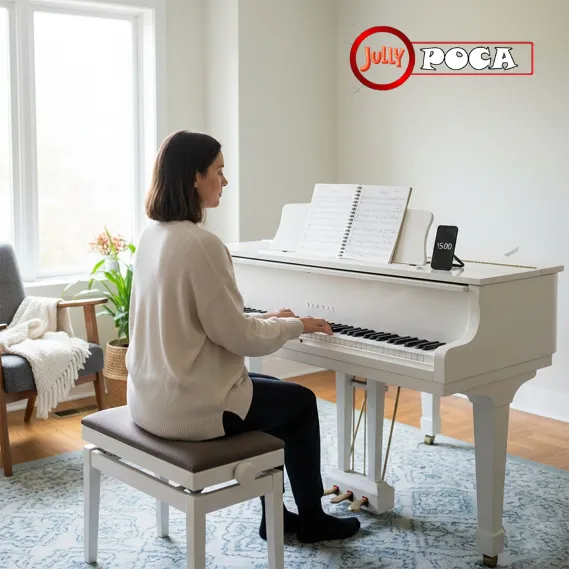
- Sit at the front half of the bench.
- Keep your feet flat on the floor.
- Your elbows should be slightly above the keys.
- Sit tall, but keep your shoulders relaxed.
This position supports your back and arms. It also helps you reach all parts of the keyboard without strain.
For a more detailed visual explanation, you can study proper piano posture on the Yamaha guide: proper piano posture.
Form a natural hand shape
Imagine you are gently holding a small ball or an orange. That is close to the ideal hand curve.
- Knuckles lifted, not collapsing.
- Fingers curved, not flat.
- Wrists loose, neither low nor very high.
This shape protects your hands and creates a clear, controlled tone.
A short real‑life example
A beginner named Sara practiced daily but felt constant hand tension. Her teacher adjusted her bench height and hand shape. Within two weeks, her playing felt easier. She also enjoyed practice more because her body no longer hurt.
2. Learn how to play piano by mastering a tiny daily habit ⏱️
The most common question beginners ask is not about theory. It is about time. They wonder how much they must practice to see progress.
The honest answer: small, consistent practice beats long, random practice.
Aim for “minimum daily” practice
For true beginners, this simple rule works well:
- 10–15 minutes a day
- At least 5 days per week
If you feel motivated, play longer. If you feel tired, still keep the promise of your minimum time. Over weeks, this habit creates strong progress.
Break your practice into mini‑blocks
A short practice can still be structured:
- 3–4 minutes: warm‑up (finger stretches, simple five‑note patterns)
- 4–6 minutes: a small skill (a new note, rhythm, or chord)
- 4–6 minutes: a piece you enjoy
This balance keeps practice focused yet enjoyable. 🎶
Sample beginner practice plan
| Practice Time | Focus Area | Outcome After a Few Weeks |
|---|---|---|
| 10 minutes | Simple scales + pieces | Better finger control and note recognition |
| 15 minutes | Scales + chords + song | Stronger rhythm and smoother hand movement |
| 20 minutes | Technique + 2 pieces | Noticeable musical flow and memory improvement |
When you practice how to play piano with a clear routine, you remove decision stress. You simply show up and follow the plan.
3. Train your ears as early as your fingers 👂🎵
Many people think learning piano is only about reading notes. Reading is important. Yet your ears guide your fingers and shape your musical sense.
Sing and play simple patterns
Choose a tiny pattern, like three notes going up. For example: C–D–E.
- Play the notes slowly.
- Sing them as “la‑la‑la” or with note names.
- Repeat the pattern starting on different keys.
This exercise connects the sound, the movement, and your inner hearing.
Copy short melodies by ear
Pick a song you know very well. It could be a children’s song or a simple melody from a movie.
- Hum the first few notes.
- Try to find them on the keyboard.
- Do not worry if it takes time. That effort is your training.
A student named Mark spent five minutes each day copying TV themes by ear. He soon felt more confident with melodies. Reading sheet music became easier because his ear already knew what to expect.
4. Learn the keyboard map: patterns, not 88 mysteries 🗺️
The full keyboard can feel intimidating at first. It looks like a long, endless row of keys. The secret is: it is mostly repeating patterns.
Spot the black‑key groups
Look for groups of two black keys and three black keys.
- Find a group of two black keys.
- The white key just left of the first black key is C.
- Between those two black keys is D.
- Right after them is E.
This pattern repeats across the entire keyboard.
Memorize only a few key names first
You do not need to memorize all notes at once. Start with:
- C, D, E (around the middle of the keyboard)
- Then add F and G
- Later add A and B
This slower approach keeps you calm and focused. It builds trust in the instrument.
Use visual anchors
Many learners stick a small, removable label on middle C and nearby notes. That is fine at the very beginning. Plan to remove them within a few weeks. Your eyes and hands will adjust.
Understanding how to play piano becomes easier when the keyboard feels familiar, not mysterious.
5. Read music step by step, not all at once 📖
Reading sheet music is like reading a new language. You do not need to be fluent on day one. You can take it in small, friendly steps.
Start with rhythm on a single note
Before reading many different notes, practice rhythm on just one key.
- Choose middle C.
- Clap or tap a simple pattern.
- Then play the same pattern on C.
This helps you focus on when to play, not just what to play.
Learn a few notes per week
Choose a very basic beginner book or method. Aim to learn only a few new notes at a time.
For example:
- Week 1: middle C in both hands
- Week 2: add D and E
- Week 3: add B and F
Repeat small pieces often. Speed is not the goal. Comfort is the goal.
Use trusted learning materials
High‑quality resources can guide your reading progress. A helpful overview of simple chords and reading basics can be found in this basic piano chords chart: basic piano chords chart.
Choose resources that feel clear, supportive, and not rushed.
6. Use chords and patterns to sound musical sooner 🎶
Many beginners think they must wait months before they sound “musical.” That is not true. Simple chords let you accompany songs early in your journey.
Understand what a chord is
A chord is usually three or more notes played together. For beginners, start with triads (three‑note chords).
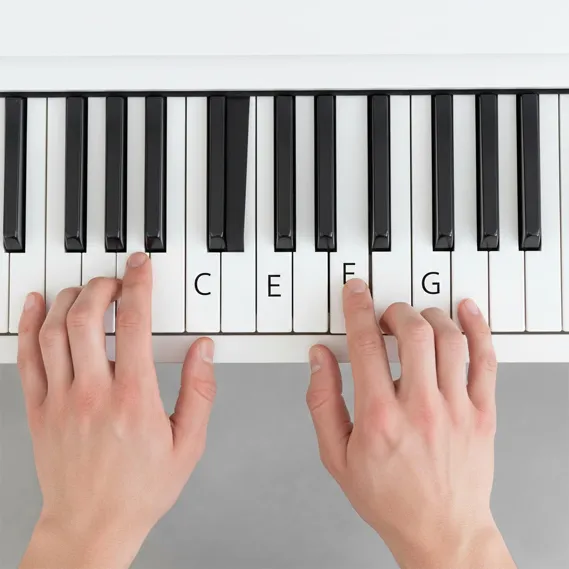
Example: C major chord
- Notes: C–E–G
- Play them together with your right hand.
- Then try them with your left hand.
Learn a small set of useful chords
You can play many songs with only a few chords. For example:
- C major (C–E–G)
- F major (F–A–C)
- G major (G–B–D)
- A minor (A–C–E)
Practice changing between these chords slowly. Use a steady beat. Focus on clean, even sound, not speed.
Turn chords into music
Pick a simple song in C major. Play a chord in your left hand and the melody in your right hand. If that feels too hard, play only the chord rhythm and hum the melody.
This approach lets you learn piano in a way that feels musical very quickly. It also supports singing and playing at the same time, which many learners enjoy. 🎤
7. Protect your motivation with realistic expectations 💬
Many people give up not because they lack talent, but because they hold harsh expectations. Managing your mindset is a vital part of understanding how to play piano for the long term.
Accept the beginner stage
In the beginning:
- Your hands may feel clumsy.
- Reading may feel slow.
- Mistakes will be frequent.
All of this is normal. It does not mean you are failing. It means your brain and fingers are building new connections.
Track small wins
Instead of judging a single practice session, notice:
- A chord that sounds cleaner than last week.
- A piece that feels smoother.
- A rhythm that you finally understand.
Write one small success after each practice in a notebook. Over time, you will see a pattern of growth. 🌱
Use friendly self‑talk
When you struggle, try phrases like:
- “I am still learning this.”
- “This part is new, so it is okay that it feels hard.”
- “I improve by showing up, even on messy days.”
This supportive attitude helps you stay with the instrument long enough to enjoy deep progress.
Common questions about learning piano as a beginner ❓
Is it ever too late to learn piano?
No. Adults can learn piano at any age. Your learning style may differ from a child’s, but your ability to enjoy music does not expire. With patient practice, you can build real skill.
Do I need an acoustic piano, or is a keyboard enough?
A full‑size digital keyboard with weighted keys is usually enough for beginners. It should have 88 keys if possible. An acoustic piano offers richer touch and sound, but a quality keyboard is a great starting point.
How long before I can play simple songs?
With steady practice, many beginners play easy songs within a few weeks. That assumes 10–20 minutes of focused practice most days. More complex pieces will take longer, but you will feel progress along the way.
Should I learn with a teacher or on my own?
A teacher offers guidance, feedback, and motivation. That support can prevent bad habits. However, self‑study can work if you stay disciplined and choose structured resources. Many people combine both: lessons plus online tutorials.
What is the fastest way to learn how to play piano?
The fastest way is also the most balanced. Use short daily practice, correct posture, simple reading exercises, chord work, and ear training. Skipping fundamentals may feel faster, but it usually slows you later.
Conclusion: Your beginner journey can be steady, joyful, and real 🎹✨
Learning how to play piano does not require perfection, endless free time, or special talent. It asks for something simpler and more sustainable: gentle consistency and smart habits.
You have seen seven “secrets” that teachers use every day:
- A calm, healthy posture and hand setup
- A tiny, daily practice habit
- Early ear training alongside finger work
- Clear understanding of the keyboard map
- Step‑by‑step reading, not overwhelming pages
- Simple chords to sound musical sooner
- A kind mindset that protects motivation
If you apply even two or three of these ideas, your experience will change. You will feel less stuck and more capable. Over weeks and months, those small steps will add up.
Your next action can be very simple. Sit at your piano or keyboard today. Choose one short exercise from this article and try it for ten minutes. Then come back tomorrow and repeat.
This is how a real pianist’s journey begins: one calm, focused session at a time. 🌟


2 Comments
Pingback: 9xflix .com – 7 Shocking Reasons It’s a Terrible Choice for Movie Fans
Pingback: cast of taarak mehta ka ooltah chashmah: 10 Amazing Facts Fans Will Love