




If your days feel scattered and reactive, the management guide ewmagwork was written for you. It shows managers, team leads, and small business owners how to turn ewmagwork from “another tool” into a daily, reliable system.
Instead of complex theory, this guide focuses on:
- Simple project structures
- Clear task ownership
- Short daily routines that fit real schedules
When you use it every day, you start to see steady, practical improvements. Below are 15 positive outcomes you can expect when you follow this guide with your team.
1. A Clear, Repeatable Daily Structure
The first outcome is simple: your day gains structure. 🧭
The management guide ewmagwork walks you through a routine built around:
- Morning dashboard review
- Short standup meetings
- Ongoing status updates
- End-of-day checks
You no longer start the day opening ten different tabs. Instead, you open ewmagwork and follow the same steps:
- Check key projects and boards.
- Review what is late, due today, and upcoming.
- Adjust priorities and remove blockers.
Example:
A small marketing agency owner starts each morning with a 10-minute ewmagwork review. Within minutes, she knows which client work needs attention and which tasks can wait.
2. Less Chaos, More Control Over Projects
Without a clear system, tasks live in email threads, chat tools, and people’s memories. That creates chaos and stress.
By using the ewmagwork management guide daily, you:
- Centralize tasks in boards and lists.
- Group work by client, team, or goal.
- Keep everything visible instead of “hidden” in messages.
Projects become easier to control because:
- Every task belongs to a project or board.
- Each task has one owner and a due date.
- You can see progress at a glance.
This helps managers move from firefighting to leading. 🔥➡️✨
3. Instant Visibility into Who Is Doing What
One of the biggest promises of the guide is visibility.
Using ewmagwork as described, you can quickly see:
- Who owns each task
- What is in progress
- What is under review
- What is late or at risk
Labels like On Track, At Risk, and Late make status clear. You do not need long status emails. You can open a board and know the state of work within seconds.
Example:
A teacher running group projects checks the class ewmagwork board before each lesson. They see which student teams have tasks stuck in “Review” and can support them right away.
4. Faster, Simpler Setup for New Projects
Many managers get stuck at setup. They overcomplicate boards, labels, and workflows.
The guide keeps setup light:
- Start with one workspace.
- Create 2–4 projects (Marketing, Operations, Client A, Product Updates).
- Use a simple flow: To Do → In Progress → Review → Done.
Because the structure is so clear, new projects are fast to launch. You do not redesign your system each time. You reuse the same proven pattern.
This reduces decision fatigue and helps your team trust the process.
5. Smoother Onboarding for New Team Members
New people often struggle to understand “how we work here.” A consistent ewmagwork setup becomes an onboarding shortcut.
With the guide:
- Every project uses the same basic columns.
- Task names follow similar patterns.
- Roles like Manager, Editor, and Viewer are clear.
A new team member can:
- Open a board
- Scan the workflow
- Understand where to put their tasks
You spend less time explaining the basics and more time sharing context and expectations.

6. Stronger Accountability Without Micro‑Managing
The ewmagwork manager playbook stresses one core rule: one owner per task.
This has a big impact:
- No confusion about “who is responsible.”
- Less finger-pointing when something is late.
- Clearer expectations for each person.
You can hold people accountable without chasing them all day. The board shows:
- Tasks assigned to each team member
- Their deadlines
- Their current status
You ask better questions:
- “I see this task is still In Progress. What’s blocking it?”
- “This is Late. Do we need to re-scope or get help?”
Accountability feels fair because the system is transparent. ✅
7. Realistic Planning and Fewer Overloaded Days
Because every task in ewmagwork has:
- A realistic due date
- A single owner
- A place in the workflow
You can see when people are overloaded.
If one team member owns every urgent task, you spot that quickly. You can move work or stretch timelines.
This leads to:
- Better workload balance
- More realistic commitments to clients
- Less last-minute panic
Many task management best practices emphasize small, clear tasks with sensible deadlines. You can see this idea echoed in guides from tools like task management best practices, and the ewmagwork guide puts that wisdom into a simple daily routine.
8. More Effective Daily Standup Meetings
The guide recommends 10–15 minute standups, using ewmagwork live.
Instead of vague updates, each person walks through:
- What moved from To Do to In Progress
- What is waiting in Review
- What is blocked or Late
Because you share the board on screen:
- Everyone sees the same information.
- Conversations stay tied to tasks.
- Meetings stay short and focused.
Example:
A startup founder opens the Product Updates board in ewmagwork during standup. Each developer talks only about the tasks assigned to them. Standup stays under 12 minutes, even on busy days. ⏱️
9. Centralized Communication and Fewer Lost Messages
One common mistake the guide warns about is approving tasks outside ewmagwork.
When approvals sit in email or chat:
- People miss key decisions.
- Files and comments get scattered.
- It’s hard to audit what actually happened.
The daily routine encourages you to:
- Comment directly on tasks
- Attach files to the correct card
- Record approvals in ewmagwork
Soon, your team knows: “If it’s not on the task, it’s not decided.” This habit saves hours of searching and confusion.
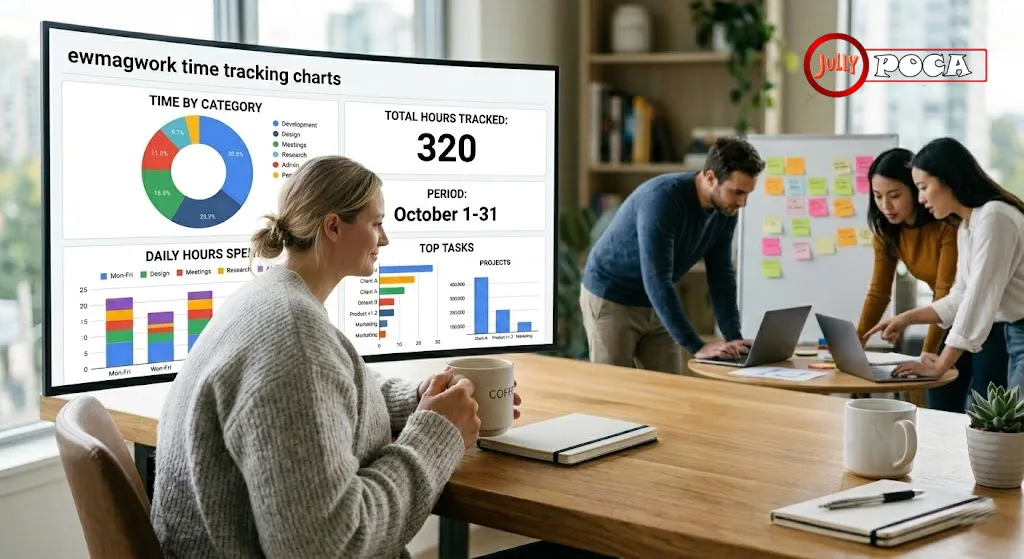
10. Better Insight Through Time Tracking and Reports
The guide also helps you use time tracking and reports without turning them into a burden.
By tracking time on tasks for a few weeks, you can see:
- Where projects regularly run over
- Which types of work take longer than expected
- Who is quietly overloaded
Reports help you improve estimates and spot bottlenecks. This aligns with many broader discussions on digital project management tools, which stress the value of data in improving workflows.
You move from guessing to making decisions based on real numbers. 📊
11. Fewer Missed Deadlines and “Forgotten” Tasks
The combination of deadlines, reminders, and daily reviews makes it much harder for tasks to disappear.
The guide helps you:
- Break work into small steps
- Give each step a due date
- Check overdue items every morning
You also learn to close finished tasks promptly, which keeps lists clean. Managers can see what is truly pending, not a mix of done and not-done work.
This structure supports consistent delivery and trust with clients or stakeholders.
12. A Simple Routine for Continuous Improvement
Because you use the guide daily, you start to notice patterns:
- Which labels your team actually uses
- Which boards feel cluttered
- Which steps often cause delays
The guide suggests:
- Collecting feedback regularly
- Fixing annoyances quickly
- Avoiding too many boards and labels
You improve ewmagwork step by step, not through a big redesign. Small changes compound over time and keep the system usable.
13. Higher Team Engagement and Ownership 🌱
People rarely enjoy new tools when they feel forced or complicated. The ewmagwork management guide encourages:
- Starting small with one project
- Training by doing real work, not long slides
- Rewarding good usage, even with simple praise
You also set clear expectations, like:
- “Update task status before standup.”
- “Add a comment when you finish Review.”
When people see their updates used in meetings and decisions, they feel their work matters. Engagement grows from participation, not pressure.
14. Easier Collaboration Across Functions and Roles
Because roles like Manager, Editor, and Viewer are defined, collaboration becomes safer and clearer.
For example:
- A manager can adjust priorities and deadlines.
- An editor can update task details and upload files.
- A viewer, like a client, can see progress without changing anything.
This structure prevents messy edits and broken boards. It is especially helpful for:
- Agencies working with clients
- Teachers with students and assistants
- Startups sharing boards with investors or advisors
You keep collaboration open but controlled. 🤝
15. More Confidence and Less Stress for Managers
Finally, the most personal outcome: you feel more confident.
When you follow the guide each day:
- You know what your team is doing.
- You can spot risks early.
- You have a simple routine when things get busy.
Instead of carrying everything in your head, you trust the system. This reduces stress and mental overload.
Managers, founders, and teachers often report:
- Better sleep before deadlines
- Fewer “urgent” late-night messages
- More space to think about strategy, not just tasks
That is the quiet benefit of using the management guide ewmagwork consistently. It gives you back mental bandwidth.
Sample Daily Routine at a Glance
Here is a quick snapshot of how the guide turns ewmagwork into a daily rhythm:
| Time of Day | Activity | What You Do in ewmagwork | Main Benefit |
|---|---|---|---|
| Morning | Dashboard Review | Check overdue, today, and upcoming tasks | Clear priorities |
| Before Standup | Task Updates | Update statuses and add comments | Accurate team discussion |
| Standup (10–15m) | Live Board Review | Walk through key boards and labels | Focused collaboration |
| Midday | Blocker Check | Scan “At Risk” and “Late” tasks | Early problem solving |
| End of Day | Wrap-Up | Close done tasks, adjust dates if needed | Clean, realistic tomorrow |
This routine works for:
- Managers and project leads
- Small business owners
- Teachers and coordinators
- Startup founders juggling many roles
FAQs about the Management Guide ewmagwork
1. Do I need a large team to benefit from the guide?
No. Even a team of two or three can benefit.
The routines help small teams stay organized, especially when people wear many hats.
2. How long does it take to set up ewmagwork using the guide?
Most managers can:
- Create one workspace
- Add 2–4 projects
- Build basic workflows
in under an hour. You refine as you go; perfection is not required on day one.
3. What if my team resists using a new tool?
Start small. Use ewmagwork for one project and one daily habit, like standup.
Show how it reduces confusion. Ask for feedback, and fix annoyances quickly. Engagement usually grows once people feel heard.
4. Can I adapt the workflow to my specific industry?
Yes. The default To Do → In Progress → Review → Done flow fits most cases.
You can rename steps to match your field, as long as the process stays simple and clear.
5. Is the guide useful for remote or hybrid teams?
Absolutely. Shared boards, comments, and time tracking help remote teams stay aligned.
The daily routine works well across time zones, especially when everyone updates tasks before standup or handover.
6. How often should I review reports and time tracking data?
For most teams, a weekly review is enough.
Use it to adjust estimates and spot patterns, rather than micromanage individuals.
Conclusion: Making ewmagwork Your Daily Management Anchor 🧩
Used once in a while, any tool feels confusing. Used every day with a clear routine, it becomes a trusted partner.
The management guide ewmagwork turns ewmagwork into that kind of partner. It gives you:
- Simple project structures
- Clear task ownership
- Short, consistent daily habits
By starting small, keeping workflows light, and embedding routines like morning reviews and standups, you reduce stress and increase clarity. Projects stay on track, and your team knows exactly what to do next.
If you manage people, projects, or classrooms, consider adopting this guide as your daily playbook. Over time, those small, steady habits can transform how your team works—and how you feel about leading them. ✨


1 Comment
Pingback: Diagrama de Ishikawa: 10 Positive Ways It Boosts Quality and Efficiency