



If you are a careful tech buyer, you may already be wondering, should i use lopulgunzer for my next project.
That question sounds simple. Yet behind it sit budget choices, team productivity, and long‑term maintenance.
Lopulgunzer is still undefined in the public space. It is not a mainstream platform, library, or service. You will not find a huge community, polished tutorials, or endless forum threads.
That is exactly why your question matters. Instead of chasing hype, you are pausing. You want structure, clarity, and practical guidance. This article gives you that structure.
We will not treat Lopulgunzer as magic. Instead, we will treat it as what it really is today:
- A niche, emerging, loosely defined solution.
- With limited visibility, documentation, and support.
- That requires careful evaluation before it deserves your time or budget.
You will see seven reasons why this question is “amazing” for serious tech buyers. Each reason helps you assess Lopulgunzer, and any other trendy tool that appears tomorrow.

1. Asking “should i use lopulgunzer” Forces You to Define What It Actually Is 🧩
Many teams jump into new tools without a clear definition. With Lopulgunzer, that shortcut is impossible. There is no established category yet.
That uncertainty becomes your advantage. It forces you to ask basic, essential questions:
- Is Lopulgunzer a framework, a service, or a workflow idea?
- Where in the stack would it live?
- Which current tools would it replace or extend?
Because Lopulgunzer is not mainstream, you cannot rely on assumptions. You must write down what you think it is. Then you must test that definition against reality.
What We Actually Know About Lopulgunzer Today
Right now, Lopulgunzer looks more like a concept space than a polished product:
- Undefined nature
You will not find a standard one‑sentence description everywhere. - Sparse documentation
Guidance, tutorials, and case studies are rare or fragmented. - Minimal community support
There is no massive user forum ready to answer questions.
That lack of structure sounds frustrating. Yet it protects you from lazy thinking. To move forward, you must:
- Describe how you expect Lopulgunzer to behave.
- Identify the part of your workflow it touches.
- Decide which metrics it should improve.
This habit alone separates careful buyers from impulsive adopters.
When a tool is still a mystery, clarity becomes your greatest resource.
2. It Makes You Align Any New Tool With Real, Measurable Goals 🎯
Once you ask whether you should use this emerging Lopulgunzer solution, you quickly reach a deeper issue.
What exact problem are you trying to solve?
Too many tools promise generic gains:
- “Faster delivery”
- “More automation”
- “Smarter workflows”
These phrases mean little without context.
Lopulgunzer may only be useful if you can connect it to specific, measurable outcomes.
Translate Curiosity Into Clear Objectives
Before any test, write down:
- Which process hurts today?
- Which metric shows that pain?
- What target value would count as real improvement?
Example:
- Pain: CI pipeline is slow and flaky.
- Metric: Median pipeline duration and failure rate.
- Target: 30% faster, with no extra failures.
Now Lopulgunzer has a clear job. It is either a meaningful candidate or just noise.
Your question stops being “Is this shiny tool interesting?”
It becomes “Can this tool move the metric that matters?”
Always Compare Against Stable Alternatives
No emerging tool deserves blind trust. Even if Lopulgunzer sounds promising, you must compare it against:
- Existing stable open‑source projects.
- Commercial platforms with reliable support.
- In‑house workflows that already work.
Lopulgunzer should only replace current tools if you can see clear, measurable gains.
Curiosity is healthy. Replacement requires evidence.
3. It Helps You Notice the Quiet Advantages: Simplicity, Control, and Adaptability ⚙️
Emerging, niche tools often have subtle strengths. Those strengths can matter a lot to the right teams.
When you ask whether Lopulgunzer fits, you create space to notice qualities that do not appear on flashy landing pages.
Possible Strengths of a Minimal, Niche Tool
Lopulgunzer, like many non‑mainstream ideas, may offer:
- Simplicity
A smaller feature set can mean less bloat and fewer moving parts. - Adaptability
You can often bend a lightweight tool to match unique workflows. - Greater control
You may control configuration, deployment, and integration more tightly.
These traits appeal strongly to optimization‑focused users. They enjoy refining workflows. They want to tune each step until it fits just right.
A Short, Practical Example
Imagine a small SRE team. Their current automation platform is feature‑rich but heavy. Configuration files are huge. Onboarding is slow.
They try Lopulgunzer in a sandbox. They discover:
- The configuration model is simpler.
- Custom workflow steps are easier to script.
- Logs and hooks are easier to inspect.
The tool is not perfect. Documentation is thin. However, the team values control and simplicity more than polished dashboards. For them, this niche choice might be worth deeper trials.
By asking this question early, they recognize where Lopulgunzer might shine. They also see where it falls short. Both insights are valuable.

4. It Keeps You Honest About Risks, Limitations, and Long‑Term Stability ⚠️
Every emerging solution carries risk. Asking should i use lopulgunzer makes those risks impossible to ignore.
You cannot just assume that things will “work out later.” You must face trade‑offs up front.
Key Risks You Need to Examine
- Sparse documentation
You may spend hours guessing how features should behave. - Limited support channels
There may be no support team or active community. - Integration challenges
Existing CI, observability, and deployment workflows might not plug in cleanly. - Uncertain roadmap
Development could slow or stop without warning. - Dependency risk
Your stack might end up tied to something few people understand.
Compare Risks Against Established Tools
Here is a quick comparison to guide your thinking.
| Criteria | Lopulgunzer (emerging) | Established tools | What it means for you |
|---|---|---|---|
| Documentation | Sparse or experimental | Mature, extensive guides | More guesswork vs. faster onboarding |
| Community support | Small or non‑existent | Large, active forums and Q&A | Harder to get help |
| Integration ecosystem | Limited or unclear | Many plugins and integrations | More custom glue code with Lopulgunzer |
| Vendor / maintainer track | Unclear longevity | Known history and funding | More risk of abandonment |
| Feature stability | May change quickly | Slower, managed release cycles | Potential breakage after updates |
This table does not say “never touch Lopulgunzer.”
It says “enter with open eyes and a clear risk budget.”
You may decide that your project cannot tolerate this level of uncertainty. In that case, your initial question already saved you from painful rework.
Or you may accept higher risk in a low‑impact area, in exchange for potential gains. The point is honesty, not fear.
5. It Clarifies Whether You Are the Right Kind of User for Lopulgunzer 🧠
Not every tool suits every buyer. That is especially true with niche solutions.
When you ask whether this Lopulgunzer idea fits, you also ask whether you match its ideal user profile.
Best‑Fit Users for Lopulgunzer‑Style Tools
Lopulgunzer is most likely to suit:
- Experimental thinkers
They enjoy trying new workflows and do not mind some friction. - Optimization‑focused engineers
They look for small, compounding gains in process and tooling. - Teams with safe experimentation spaces
They can try new tools on non‑critical workloads first.
For these people, sparse documentation is a challenge, but not a deal‑breaker. They know how to read code, run tests, and infer behavior.
Who Should Probably Avoid It for Now
Lopulgunzer is not ideal if you:
- Need guaranteed reliability and clear SLAs.
- Rely on junior teams who need strong documentation.
- Face strict compliance or audit requirements.
- Are under pressure to deliver with zero experimentation budget.
Lopulgunzer may grow into a stable choice over time. Today, it behaves more like an experimental option.
That is not criticism. It is a realistic fit check.
6. It Trains You to Evaluate Any Emerging Tool, Not Just Lopulgunzer 📈
The habits you build while exploring Lopulgunzer will help you far beyond this one decision.
Every year, new platforms appear. Each promises speed, automation, or intelligence. Few survive long term.
By working carefully through this question, you build a reusable evaluation playbook.
Reusable Evaluation Skills You Develop
- Defining the problem before choosing tools.
- Translating vendor claims into measurable outcomes.
- Estimating integration cost and migration risk.
- Testing in low‑impact environments first.
- Documenting experiments and results.
These are the same skills used by thoughtful architecture teams. They do not depend on the tool’s brand or buzz.
The question “should i use lopulgunzer” becomes a training ground. You learn to resist hype and replace it with evidence.
Short Example: Applying the Same Mindset Elsewhere
Imagine next year a new orchestration system appears. It promises “AI‑assisted deployments.”
Instead of rushing in, you:
- Ask which part of your pipeline it would replace.
- Define metrics you hope it will improve.
- Conduct a small test environment trial.
- Compare results against your current stack.
The patterns match your Lopulgunzer process. You are no longer a passive target for marketing. You are a disciplined evaluator.
7. A Clear Decision Framework Turns Doubt Into Actionable Clarity ✅
The most valuable outcome of asking about Lopulgunzer is not a simple yes or no. It is a repeatable decision framework.
Here is a practical four‑step process you can follow. You can use it for Lopulgunzer or any other emerging tool.
Step 1: Define the Exact Problem
Write one short, concrete problem statement.
Examples:
- “Our nightly data job often exceeds its time window.”
- “Developers wait too long for feedback from tests.”
Avoid generic desires like “improve productivity.” Link the problem to data you already track.
Step 2: Test in a Low‑Impact Environment
Never start with your most critical system. Instead:
- Use a staging environment.
- Choose a non‑critical service or workflow.
- Limit the test to a narrow scope.
During this phase, you can safely explore how Lopulgunzer behaves. You can map integration points. You can discover gaps in documentation.
This is where you answer a key question in practice, not theory. In this bounded context, should i use lopulgunzer or stay with my current approach?
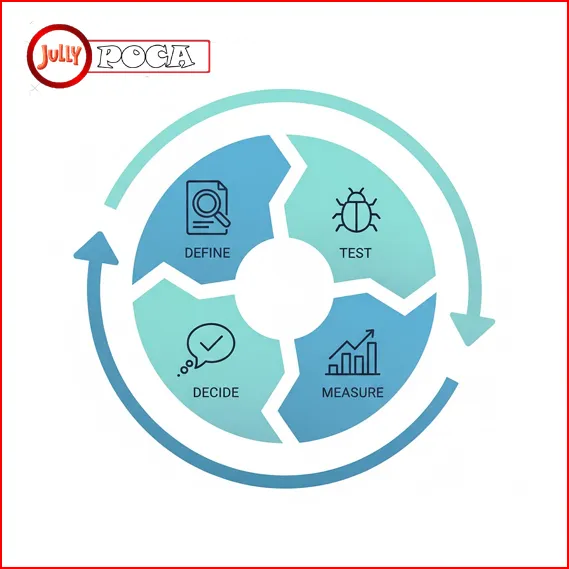
Step 3: Measure Outcomes Objectively
Return to your chosen metrics. During the test, capture:
- Baseline data (before Lopulgunzer).
- Trial data (with Lopulgunzer applied).
Keep the measurement window long enough to see patterns. Avoid judging based on a single run.
Examples:
- Pipeline duration over two weeks.
- Error rates across several deployments.
- Time spent on manual steps per sprint.
Look beyond raw performance. Factor in:
- Time spent on setup and troubleshooting.
- Training required for new users.
- Impact on team morale and focus.
Step 4: Decide Based on Results, Not Assumptions
Your final choice should follow the evidence:
- If Lopulgunzer delivers clear, measurable gains
Consider gradual adoption in more areas, with regular reviews. - If results are flat or negative
Document the findings, then park the tool for now. - If results are mixed
You may keep it only for very specific use cases.
Most important, write a short decision note. Include:
- Problem statement.
- Test scope and setup.
- Metrics and results.
- Final decision and rationale.
That note supports future audits and discussions. It also helps you revisit Lopulgunzer later, if it matures.
Quick Real‑World Scenario: How a Team Might Work Through This 🧪
To make this framework concrete, here is a compact scenario.
A mid‑size product team hears about Lopulgunzer from a conference talk. It promises more flexible job orchestration.
They follow the framework:
- Define the problem
Their nightly build process is slow and fragile. - Test in low‑impact space
They move only one non‑critical build stage into a Lopulgunzer‑based flow. - Measure outcomes
- Build time improves by 25%.
- However, operators spend more time reading sparse logs.
- Onboarding new team members is slower due to limited guides.
- Decide with evidence
They keep Lopulgunzer only for one specialized task.
They decide not to roll it out broadly yet.
Later, if documentation improves, they can revisit the choice. No drama. No sunk cost crisis.
Their original question guided them toward a balanced, data‑driven answer.
Frequently Asked Questions About Lopulgunzer 🤓
1. Is Lopulgunzer ready for production use today?
It depends on your risk tolerance. For many organizations, Lopulgunzer is better suited to experiments and non‑critical workflows right now. Teams with strict uptime or compliance needs should proceed very carefully.
2. How many resources should I invest in testing Lopulgunzer?
Keep initial investment small. Use one or two engineers, a limited test scope, and a fixed timebox. If early signals are promising, you can grow the experiment. If not, you can exit with minimal cost.
3. How do I compare Lopulgunzer against my existing tools fairly?
Use the same metrics for both. Measure setup time, operational effort, performance, reliability, and integration complexity. Avoid judging Lopulgunzer only on its best day and your current tool on its worst day.
4. What if my team likes experimenting, but leadership fears risk?
Use the four‑step decision framework. Emphasize low‑impact trials, clear metrics, and written results. This structure shows leaders that experimentation is controlled, not chaotic.
5. Is it worth it to ask should i use lopulgunzer for every project?
You do not need to repeat the full analysis every time. However, for any significant tool choice, adopting the same mindset is wise. The question reminds you to slow down, define goals, and evaluate options with care.
6. How will I know if Lopulgunzer becomes safer over time?
Watch for growing documentation, a more active community, and clearer release notes. Also track whether other reputable teams share case studies, talks, or code examples. These signals suggest increasing maturity.
Conclusion: Turning a Vague Tool Into a Clear, Informed Decision 🌱
By now, you can see why “should i use lopulgunzer” is more than a passing thought. It is a gateway to better decisions about every tool in your stack.
You explored how:
- The undefined nature of Lopulgunzer forces you to seek clarity.
- Alignment with concrete goals protects you from hype.
- Potential advantages like simplicity and control may suit specific users.
- Real risks demand honest assessment and careful scoping.
- Your personal and team profile matters as much as any feature list.
- The skills you build here apply to every future tool choice.
- A simple four‑step framework turns doubt into structured experimentation.
If Lopulgunzer fits your goals, your risk budget, and your team style, you now have a safe path to explore it. If it does not, you can walk away with confidence, knowing your decision came from evidence, not fear.
Either way, keep this mindset close. The next time a new tool appears on your radar, let this same question guide you: not just should i use lopulgunzer, but “What problem am I solving, and what proof do I need before I commit?”
That habit will protect your time, your budget, and your team’s focus for years to come. 🌟


1 Comment
Pingback: Yvette Prieto Twins: 6 Surprising Details Fans Love