




Some days you end work feeling drained, scattered, and strangely unaccomplished 😓. Other days, the same hours leave you focused, proud, and calm.
The difference often isn’t your talent. It’s how you structure each working session. With a few intentional habits, these focused blocks of time can upgrade your lifestyle, not just your to‑do list.
This guide will walk you through seven habits that make your work sessions feel purposeful and manageable. You’ll learn how to protect your focus, handle meetings better, and end your day with more energy for the rest of your life.
Understanding Focused Sessions: Definition and Benefits
Before diving into habits, it helps to clarify the concept behind this way of working.
So, what is a working session?
First, let’s answer a simple question many people ask: what is a working session?
In practical terms, a working session is a time‑boxed block of focused effort. During that block, you and possibly others move real work forward, not just talk about it. You leave with clear progress, not just more notes.
People also search online for “working session meaning” because they sense it is different from a normal meeting. They are right. Some key differences:
- The goal is output, not only discussion.
- Everyone contributes work, not just opinions.
- Distractions are minimized on purpose.
You can run work sessions alone or with others. When done well, they reduce stress, prevent procrastination, and create a calmer rhythm to your day.

1. Start Every Session With a Clear, Simple Intention 🎯
A lot of stress comes from vague goals. You sit down “to work” and instantly feel overwhelmed.
Before each working session, pause for one minute and set a clear intention. That tiny step can change everything.
Use the “One Clear Outcome” rule
At the start, ask yourself:
- “If this block goes well, what one thing will be true at the end?”
Examples:
- “Draft the first section of the client report.”
- “Clean my inbox down to 20 messages.”
- “Outline three ideas for next month’s content.”
Keep it concrete and finishable. Your brain loves closure. When you end with a clear result, your mood improves and motivation rises.
Break big tasks into session‑sized chunks
Huge projects don’t fit neatly into short work sessions. Break them down into chunks that match your available time.
For a 60‑minute block, that might look like:
- 10 minutes: review notes
- 40 minutes: write or build
- 10 minutes: tidy up and summarize
When your goals match your capacity, you feel capable instead of constantly behind. That feeling supports a healthier lifestyle long term.
2. Design an Environment That Protects Your Focus 🧘♀️
Your environment can quietly sabotage you or support you. You can’t depend on willpower alone.
Remove obvious distractions before you start
Before you begin, do a quick two‑minute reset:
- Close extra browser tabs.
- Silence non‑essential notifications.
- Put your phone in another room or face down.
- Clear visible clutter from the small area you see.
You don’t need a perfect space. You just need fewer distractions than usual. Small barriers to distraction add up to big gains in focus.
Use sensory cues that tell your brain “we’re on”
Your brain responds to signals. Use that fact. Choose one or two cues that you use only during focused work:
- A specific playlist or type of background sound.
- A scented candle or essential oil.
- A particular chair, corner, or desk setup.
Over time, these cues become shortcuts. You sit down, start the playlist, and your brain knows, “This is focus time.” That makes starting much easier, even when motivation is low.
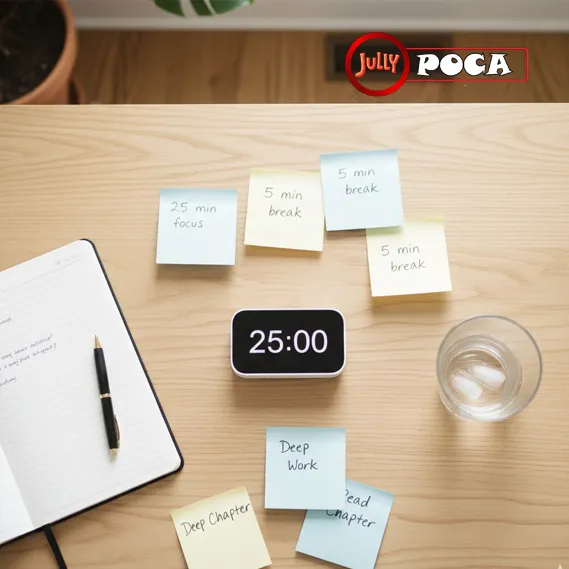
3. Break Work Sessions Into Manageable Sprints ⏱️
Long, unstructured blocks can feel heavy. Short sprints feel more playful and achievable.
Instead of planning a three‑hour grind, divide your work sessions into sprints with brief breaks.
Try a flexible “focus + mini break” pattern
You don’t need to follow a strict method. Aim for something like:
- 25–40 minutes of focused effort
- 5–10 minutes of a real break
During the focus period:
- Work on one clear task.
- Avoid checking messages unless urgent.
During the break:
- Stand up and stretch.
- Look away from screens.
- Drink water or tea.
Short sprints reduce mental fatigue and help you maintain steady progress without burnout.
Match sprint length to your natural rhythm
Some people can focus deeply for 50 minutes. Others do better at 25. Experiment for a week:
- Day 1–2: 25 minutes on, 5 off
- Day 3–4: 35 minutes on, 7 off
- Day 5–7: 45 minutes on, 10 off
Notice when you start to fade or glance at your phone. That is your natural limit. Build around it instead of fighting it.
4. Turn Working Session Meetings Into Collaborative Labs 🤝
Not all focused blocks are solo. Sometimes you need others. That is where the idea of a working session meeting stands out from ordinary meetings.
In a regular meeting, people talk about work. In a collaborative session, people actually do the work together.
You can learn more about this style from resources on working session meeting, but here are core ideas you can apply right away.
Key differences: normal meeting vs collaborative session
Use this table as a quick comparison guide:
| Type | Main Goal | Typical Outcome | Energy Afterward |
|---|---|---|---|
| Status meeting | Share updates | Notes, action items | Often drained 😩 |
| Brainstorm meeting | Generate ideas | Long list of possibilities | Mixed: excited or tired |
| Working session | Produce concrete work | Drafts, decisions, completed tasks | Often satisfied 😌 |
In a collaborative session, people share screens, edit documents live, sketch, or code together. You leave with finished pieces, not just plans.
How to run a simple collaborative session
When you host this kind of session:
- Set one shared outcome.
- “By the end, we will have a draft project timeline.”
- Prepare materials in advance.
- Shared docs, mockups, or templates ready to open.
- Limit attendees.
- Invite only people who will actually build or decide.
- Switch quickly from talk to action.
- After five minutes of context, move into live work.
- End with a visible result.
- Show the finished draft, checklist, or diagram.
Structured this way, group sessions feel productive and energizing. You get real progress without adding more stress to your day.
5. Use Rituals to Enter and Exit Deep Focus 🔁
Rituals are small actions that signal transitions. They reduce friction and help you switch gears more smoothly.
You can build tiny rituals around the start and end of each focused block.
A 3‑step “start ritual” that takes two minutes
Try this simple sequence:
- Clear view.
- Remove or stack anything unrelated from your immediate view.
- Name your outcome.
- Write one line in your notebook: “In this block, I will…”
- Choose your cue.
- Start your focus playlist, light a candle, or open your timer.
Repeat this pattern daily. Within a week, your brain will associate these steps with getting into flow.
An “end ritual” that protects your lifestyle
How you end matters as much as how you begin. A messy ending lingers in your mind all evening.
Try this short closing routine:
- Spend three minutes summarizing what you finished.
- Note any next steps for your future self.
- Close all related tabs and apps.
- Take three slow breaths and stretch.
This makes it easier to leave work at work, even when your office is your kitchen table. Your evenings feel more free and present. ✨

6. Track Energy, Not Just Time ⚡
Many people schedule their day by the clock alone. They ignore their natural energy waves. That often leads to pushing through when they should rest, and wasting high‑energy moments.
Instead, notice when you feel sharp, creative, or drained. Then match tasks and sessions to those patterns.
Map your daily energy curve
For one week, keep a quick log:
- Morning: high, medium, or low energy?
- Midday: high, medium, or low?
- Late afternoon: high, medium, or low?
- Evening: high, medium, or low?
Also note what type of work felt easy or heavy at each time.
After a week, look for patterns. Many people find:
- Mornings: best for deep focus tasks
- Early afternoons: better for light admin
- Late afternoons: good for quick, practical tasks
You can then reserve your best windows for your most important session of the day.
Protect your “prime time” like a resource
Once you know your prime focus hours, treat them as protected space.
- Say no to non‑urgent meetings in that window when possible.
- Batch shallow tasks (email, chat replies) for lower energy times.
- Keep that prime block for one high‑value deep task.
This small shift can transform your output and mood. You will stop feeling like you are always behind, and start finishing big things with less struggle.
7. Reflect Weekly and Adjust Your Lifestyle 🪞
Habits only help if they fit your real life. That requires reflection.
Once a week, take 10–15 minutes to look back at your recent sessions and gently review what worked.
Ask three simple questions
In your weekly review, write answers to these:
- What went well in my focused sessions this week?
- Where did I feel rushed, stressed, or distracted?
- What one small experiment will I try next week?
Examples of experiments:
- “I will test 30‑minute sprints instead of 45‑minute ones.”
- “I will schedule my hardest task before checking email.”
- “I will stand up during breaks, not scroll.”
Keep the changes small. Consistent, tiny improvements shape a better lifestyle more than one big overhaul.
Connect your sessions to your bigger life goals
Finally, ask yourself:
- “How did this week’s focused work move my life forward?”
You might think of:
- More time with family because you finished on time.
- Less anxiety because you handled a task you avoided.
- New learning that will support a future career step.
This connection makes effort feel meaningful. When your daily actions align with your values, your lifestyle naturally upgrades. 🌱
FAQs About Working Sessions
1. How long should a typical session last?
For most people, 45–90 minutes works well. Shorter blocks help if you struggle with focus. Longer blocks can work if you are already comfortable with deep concentration. The key is to include brief breaks and a clear outcome.
2. Can I use this approach if my job is full of meetings?
Yes. You can still carve out small focus windows. Try to protect at least one block each day, even 30 minutes, where you are not in calls. Use that time for your most important task. Over time, you can also suggest more collaborative sessions instead of purely status meetings.
3. Is a session only for work, or can I use it for personal life?
You can use the structure for anything that needs focus:
- Studying or learning a skill
- Planning finances
- Decluttering a room
- Creative projects
The same ideas apply: choose one outcome, limit distractions, and end with a small review.
4. What if I struggle to start, even with a plan?
Lower the friction. Make the first step tiny and almost impossible to resist.
Examples:
- “I will open the document and write one messy sentence.”
- “I will sort five emails, not the whole inbox.”
Once you begin, your brain often keeps going. Also, use a consistent start ritual, like the three‑step version earlier. Your body will learn the pattern.
5. How many sessions should I aim for in a day?
Quality matters more than quantity. For intense, deep work, even two or three solid blocks can be enough. On lighter days, you may have more short blocks instead. Listen to your energy and your responsibilities. Push for consistent, realistic practice, not perfection.
6. Are group sessions always better than individual work?
Not always. Group time works best when you need diverse input, real‑time decisions, or shared creation. Solo time works better for quiet thinking, writing, or tasks that require your personal judgment. A healthy rhythm usually includes both.
Bringing It All Together: Designing a Lifestyle That Works for You 🌈
When you zoom out, these habits are not only about productivity. They are about creating a kinder rhythm for your whole life.
A working session is simply a focused block where you respect your time, energy, and attention. You choose a clear outcome, protect your focus, move something real forward, and then step away with intention.
Over time, these small choices change how your days feel:
- Less rushing and context‑switching
- More calm progress on what truly matters
- Clearer boundaries between work and the rest of life
You do not need to adopt every habit at once. Choose one or two that feel easiest right now. Maybe you start by setting a single intention for your next block, or by adding a short end‑of‑session ritual.
Practice them this week. Notice how your mood and energy respond. Then, layer in the next habit.
Every working session you design with care is a small investment in an amazing lifestyle upgrade. Start with your very next block of time and let your new rhythm grow, one focused moment at a time. ✨


3 Comments
Pingback: peopleperhour: 11 Proven Strategies Every “people per hour” Freelancer Must Use to Succeed Fast
Pingback: mizwamta futsugesa: 7 Ultimate Insights into Powerful Origins, Meaning & Modern Impact
Pingback: apps and software aliensync: 8 Must-Know Tips to Turn It Into a Brilliant Tool